
Architecture Bachelor of Science (B.Sc.)
Degree: Bachelor of Science (B.Sc.)
Regular program length: 6 semester (full-time program)
Credit points (ECTS): 180 credit points
Language of instruction: German and English
Higher semester: yes
Higher semester: winter and summer term
First semester: July 15
Higher semester: July 15 for winter term, January 15 for summer term
First semester: July 15
Higher semester: July 15 for winter term, January 15 for summer term
What is it all about?
"Using scientific methods to work on the creative design of the world - that is our goal as the Karlsruhe Department of Architecture at KIT."
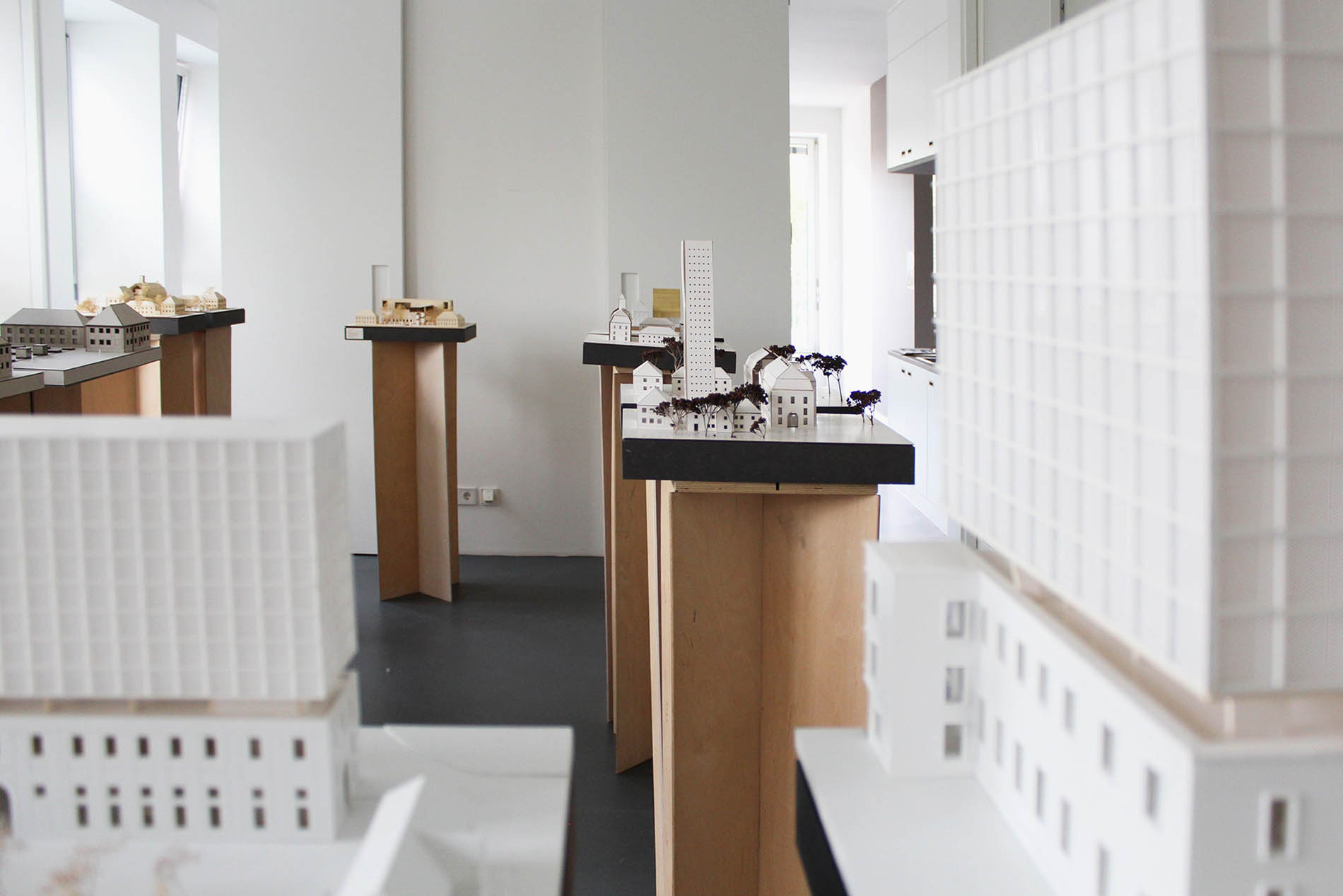
In the bachelor's degree program in Architecture at KIT, you will deal with the design, creation and construction of buildings as well as the planning of urban and landscape spaces. You will acquire the in-depth specialist knowledge required for planning and implementation and develop a sound judgment of space and context, material and construction, history and theory, use and effects, management, economics and sustainability.
One focus of the program in terms of content and methodology is design theory, which you will deepen in so-called design studios with changing thematic focuses. This is accompanied by a coordinated range of basic courses in artistic, technical, historical and social science subjects. In the higher semesters, you have the opportunity to set your own priorities and deepen your knowledge in a targeted manner.
Program structure
During your studies, you have various subjects, which consist of one or more modules. A module deals with a specific topic and consists of one or more courses. In the module handbook for your degree program, you will find a description of the modules and their subject assignment as well as a study plan. This gives you an orientation as to which courses you should attend in which semester in order to complete your studies within the standard period of study. It takes into account a balanced distribution of courses over the individual semesters. It also ensures that you are first taught the important basics before moving on to more advanced topics. Your individual course of study may differ from this.
Your studies are divided into the following subjects:
- Designing: here you will learn the basics of architectural and urban design and deal with spatial, functional and design requirements.
- Integral Designing: you will deal with interdisciplinary approaches and link design, technical and sustainability-related aspects in your design projects.
- Construction Technology: this subject provides you with the necessary knowledge of construction, materials science, building physics and structural design.
- Theoretical and Historical Basics: you will explore the theoretical and historical contexts of architecture in order to make informed design decisions.
- Designing and Representation: the focus here is on drawing, modelling and digital methods for visualizing and communicating architectural concepts.
- Urban and Landscape Planning: you will analyze and design urban planning and landscape architecture concepts in the context of social and ecological developments.
- Specialization: in this subject, you can choose from a wide range of seminars, exercises and weekly seminar courses and set your own focus according to your interests.
- Interdisciplinary Qualifications: this subject offers you the opportunity to acquire key skills that go beyond the core content of the degree program, e.g. through interdisciplinary courses or language courses.
Internship
Your bachelor's degree does not include a mandatory internship, nor is a construction internship required. However, it is strongly recommended that you complete a continuous six-month office internship during your studies. This should give you valuable insights into the practical work of architects. The internship is not credited with credit points and is not included in your overall grade.
Stays abroad
If you would like to gain international experience during your bachelor's degree, there are numerous opportunities open to you. For example, the KIT Department of Architecture has for many years maintained close partnerships with universities in Europe and around the world, where you can study for one or two semesters without paying tuition fees and earn credits that can be recognized when you return to KIT. You can obtain information and support regarding your plans abroad from the Department's International Coordination Office.
Another important point of contact, especially if you are interested in other exchange programs outside Europe, is the KIT International Students Office. It centrally organizes KIT's overseas cooperations and also informs and supports you if you are planning an internship abroad during or after your studies.
In the master's program, you have the opportunity to acquire a German-French double degree.
Bachelor's thesis
At the end of your studies, you will complete your bachelor's thesis, which is the final architectural design that summarizes the skills you have acquired during your studies. It demonstrates your qualification for a career or a master's degree in architecture. You will independently develop an architectural design and apply scientific, creative, constructive-technical, theoretical-historical, urban planning, organizational and design methods. The maximum completion time is three months and the thesis can be written in German or English.
Important note
The KIT Department of Architecture explicitely recommends completing a subsequent master's degree, as only people who have completed at least four years of subject-related study are accepted into the Chamber of Architects. Further information can be found on the website of the Federal Chamber of Architects.
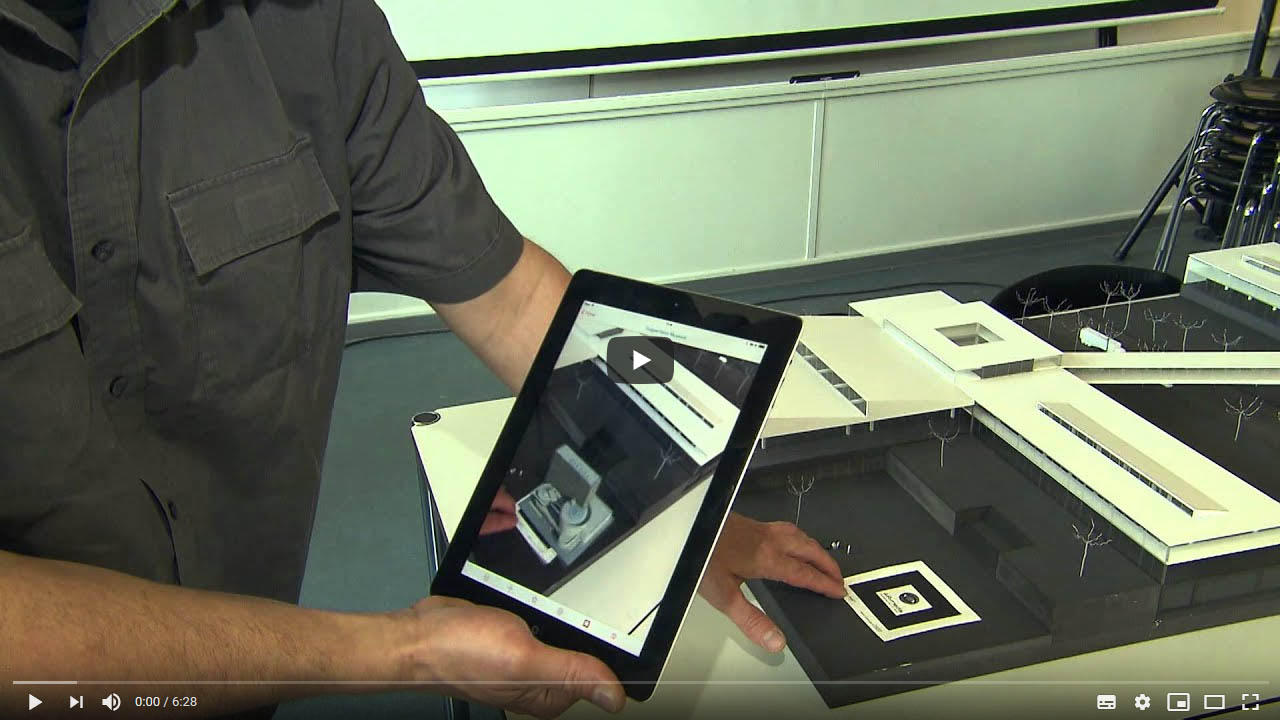
The profession is associated with a high degree of responsibility. As a cultural and public practice, architecture is closely linked to social, technological and economic developments. The diversity of the discipline means that it combines the humanities, social and natural sciences as well as technical and artistic subjects. Against this background, the program is designed to provide comprehensive knowledge in order to train creative and critically thinking personalities and to enable you to work on complex tasks in an interdisciplinary manner.
The bachelor's degree in Architecture is a self-contained study program. The Bachelor of Science (B.Sc.) degree qualifies you to work in all areas of planning and construction. However, it does not yet meet the criteria of the Chambers of Architects and the internationally recognized UIA (Union International d'Architecture) to be admitted to the Chamber of Architects and to be able to use the professional title of architect. Further qualification criteria for later admission to the profession are regulated by the Chambers of Architects of the individual federal states. The bachelor's degree program forms the first part of an overall degree program consisting of a bachelor's and a master's degree.
The professional field of activity includes the design, technical and economic planning of buildings and groups of buildings, interiors, urban districts and even entire residential areas. However, the job profile in the field of architecture and urban planning is changing. In recent years, a whole series of new fields of activity have been added to the traditional areas of activity. In particular, the examination of existing buildings and structures is becoming an increasingly important part of the work spectrum.
Graduates of the KIT Department of Architecture work in renowned architecture and urban planning offices, public authorities and cultural institutions in Germany and abroad. Even during your studies, you will benefit from a close network and targeted offers of help in finding internships and jobs. The location of Karlsruhe as a place of work and its proximity to the cultural and architectural centers of Munich, Stuttgart, Basel and Zurich is an advantage.
Fields of activity with a bachelor's degree are mainly
- employed in an architectural office or urban planning office
- employed by public authorities, the construction industry, housing and real estate companies
- Architecture-related fields of activity: building biology, building research, environmental planning, energy planning, building physics, building services, building law/damage expertise, building mechanics, monument preservation, software development (e.g. CAD programs), design, facility management (administration/management of buildings and facilities), planning methodology, project development and management,
- alternative occupational fields: e.g. stage design, journalism, politics, architectural photography
You can find further information on the job description at the Chambers of Architects.
Characteristic features of Architecture B.Sc. at KIT
the bachelor's degree program is structured as a project course, in which the focus is on a design (studio) each semester
practice-oriented teaching of the basics with excursions, design and construction projects up to a scale of 1:1
drawing workstations for all students on the bachelor's degree program
supervised study workshops with equipment hire
separate Art History program and resulting additional course offerings
internship not compulsory, but highly recommended
orientation week and mentoring program at the start of studies
numerous opportunities to study abroad
possibility of a German-French double degree in the subsequent master's program (application is already made during the bachelor's program)
What KIT has to offer
- central campus close to the city forest and right next to the city center
- orientation week before the start of lectures
- 24-hour library offering single and group working places
- wide range of inexpensive catering options (dining hall, cafeteria, Koeri and Pizzawerk)
- numerous interdisciplinary offers for personal and professional development, e.g. Lernlabor, Schreiblabor and Perspektivenlabor
- study abroad, e.g. via Erasmus
- excellent university sports facilities with a large selection of sports
- comprehensive cultural offerings with university orchestras, choirs and theater groups
- extensive support for career entry and self-employment
- Lernraum app
- internationally oriented degree programs and diverse exchange programs
- modern laboratories and practical teaching methods
- diverse student initiatives, clubs and opportunities to actively participate in campus life
- stay in touch after graduation via the alumni network
Higher education entrance qualification (HZB)
Germans and persons of equal status to Germans (i.e. EU/EEA nationals and non-EU/EEA nationals with a German higher education entrance qualification) are entitled to study at KIT if they have one of the following qualifications:
- General higher education entrance qualification (Abitur)
- (relevant) subject-restricted higher education entrance qualification (not Fachhochschulreife)
- Delta examination of the University of Mannheim (for holders of a Fachhochschulreife)
- recognized advanced vocational training (e.g. master craftsperson) or vocational training, professional experience and aptitude test for those with professional qualifications
For further options, see §58 of the "Landeshochschulgesetz" (State Higher Education Act).
Please note: German nationals with a foreign school-leaving qualification must have the relevant "Regierungspräsidium" (regional authority) certify that their qualification is equivalent to the German Abitur.
For non-EU/EEA nationals with a foreign school-leaving certificate (hereinafter also referred to simply as non-EU/EEA nationals), the school-leaving certificate from some countries is recognized as a direct university entrance qualification in Germany. In many cases, however, in addition to the school-leaving certificate, a university entrance examination and/or a successful year of study in the home country and/or the "Feststellungsprüfung" must be proven with valid documents in order to be allowed to study a bachelor's degree in Germany. You can find the country-specific regulations in the DAAD admissions database or on the Anabin website (in German only) of the "Zentralstelle für ausländisches Bildungswesen" (Central Office for Foreign Education). Further information is available from the International Students Office.
Language requirements and certificates
For the bachelor's degree program in Architecture, you need sufficient knowledge of German and English. Your knowledge of German must be at least level C1 and your knowledge of English at least level B2 of the Common European Framework of Reference for Languages (CEFR).
Important: you must provide proof of the required language skills regardless of your citizenship and by the end of the enrollment period at the latest, but preferably at the time of application.
In what form do I have to provide the language certificates? Please read the following chapters on this website carefully. If you have any further questions, please contact
- Students Office if you are applying as a German national or a person with German equivalent status
- the International Students Office if you are a non-EU national
Proof of sufficient German language skills
As proof of your German language skills, your higher education or master's entrance qualification (e.g. Abitur, university degree or a professional qualification that entitles you to study) is sufficient if you have acquired it at a German-speaking institution with German as the language of instruction.
In concrete terms, this means that you do not have to submit additional proof of German if you
- have obtained your Abitur at a German-speaking school in Germany or abroad,
- are a graduate of a bilingual secondary school in Germany or abroad and have passed a bilingual German examination, such as the AbiBac or the Gemischtsprachiges International Baccalaureat (GIB) or
- you graduated from a foreign school, but there is another official agreement with the respective country regarding the recognition of your school-leaving certificate or language certificate as proof of language proficiency for university studies in Germany.
A complete list of foreign school-leaving qualifications and language certificates that are recognized as proof of sufficient German language skills can be found on the website of the Standing Conference of the Ministers of Education and Cultural Affairs of the Laender (KMK) in the Federal Republic of Germany.
If you have already completed a German-language degree at a German university, this can also count as proof of German language proficiency - but only if the diploma supplement, transcript of records or degree certificate clearly states that German was the sole language of instruction and examination.
If, on the other hand, you did not obtain your higher education or master's entrance qualification at a German-speaking institution with German as the language of instruction, you must provide proof of German language proficiency at least at DSH-2 level. This corresponds to CEFR level C1.
Only the following certificates are accepted in accordance with the KIT admission and enrollment regulations:
- passed German section of the Feststellungspruefung (assessment test)
- passed German language test for university admission (DSH) with overall result DSH-2
- passed Test of German as a Foreign Language (TestDaF) with level 4 in all four parts of the exam
- German Language Diploma of the Standing Conference of the Ministers of Education and Cultural Affairs - second level (DSD II)
- Goethe certificate C1 or higher
- passed telc Deutsch C1 Hochschule exam
- Austrian Language Diploma C1 or higher
Note: The above-mentioned tests are accepted as proof of language proficiency for an unlimited period of time, even if the provider specifies an expiration date.
What if I cannot provide suitable C1 proof of German at the time of application?
If you are unable to provide any of the C1 certificates listed above demonstrating your German language skills by the application deadline, you may still be admitted if you can provisionally demonstrate at least B1 language proficiency. Proof of B1 level is provided by a recognized language certificate or other certification from a language or other educational institution that clearly shows that B1 level has been achieved.
But please don't forget: you still have to submit the C1 certificate by the end of your enrollment period at the latest, which is stated in your admission letter.
Therefore, check early on whether you can provide the necessary language certificates by the deadline and, if necessary, plan to take a recognized language test.
In justified cases, you can apply for an extension of the enrollment deadline to provide proof of your language skills, but this extensvion can only be granted up to the day before the start of the lecture period. Please contact the Student Office or the International Students Office - depending on who is named as your point of contact in your letter of admission.
Proof of sufficient knowledge of English
The following is sufficient proof of your English language skills
- your university entrance qualification, if
- it certifies English language proficiency at CEFR level B2 or higher or
- it shows that you have studied English for at least five years up to graduation and your final grade or average grade of the last two years of English lessons corresponds to at least the German grade 4 (sufficient) or at least 5 grade points or
- a university degree with English as the sole language of instruction and examination in the completed degree program - this must be clearly stated in the Diploma Supplement, Transcript of Records or in the degree certificate.
Otherwise, only the following English tests listed in the KIT admission and enrollment regulations are accepted as proof of English proficiency:
- TOEFL iBT (internet-based) with at least 90 points
- IELTS with an overall score of at least 6.5, no section below 5.5
- TOEIC with at least 400 points in Listening, 385 in Reading, 160 in Speaking, 150 in Writing
- Cambridge Certificate C1 Advanced (CAE)
- Cambridge Certificate C2 Proficiency (CPE)
- Cambridge Certificate B2 First (FCE)
- UNIcert, at least level II
- Pearson PTE Academic with at least 58.5 points overall and at least 56.8 in Listening, 60.6 in Reading, 53.5 in Speaking, 74.1 in Writing
Note: The above-mentioned tests are accepted as proof of language proficiency for an unlimited period of time, even if the provider specifies an expiration date.
What if I cannot provide suitable B2 proof of English at the time of application?
If you are unable to provide any of the B2 certificates listed above demonstrating your English language skills by the application deadline, you may still be admitted if you can provisionally demonstrate that you have already acquired English language skills.
But please don't forget: you will still have to submit the actual B2 certificate by the end of your enrollment period at the latest, which is stated in your admission letter.
Therefore, check early on whether you can provide the necessary language certificates by the deadline and, if necessary, plan to take one of the recognized language tests.
In justified cases, you can apply for an extension of the enrollment deadline to provide proof of your language skills, but this extension can only be granted up to the day before the start of the lecture period. Please contact the Students Office or the International Students Office - depending on who is named as your point of contact in your letter of admission.
Additional necessary requirements for enrollment
For Germans and those with German equivalent status, an additional necessary requirement for enrollment is proof of participation in a study orientation test (e.g. www.was-studiere-ich.de) or a study orientation consultation in accordance with §7 of the "Landeshochschulgesetz" (State Higher Education Act), e.g. by the Student Advisory Service (ZSB) of KIT. Non-EU/EEA nationals do not have to provide this proof.
Selection procedure for German and German-equivalent applicants
There are 156 study places available. After deducting the preliminary quotas for hardship cases (5%), foreigners (10%) and second degree applicants (2%), 10% of the study places are allocated to the applicants with the longest waiting time. 90% of the study places are allocated via a selection procedure.
The selection procedure is based on your academic performance, as evidenced by the average grade of your higher education entrance qualification (HZB), as well as the result of a practical assignment and any previous experience. Based on these achievements, you will be ranked according to points:
- average grade of the HZB = value 1 (max. 15 points)
- practical task = value 2 (max. 30 points)
- previous experience = value 3 (max. 10 points)
(value 1) x 4 + value 2 + value 3 = max. 100 points in total
You can find the assignment for the practical task on the website of the KIT Department of Architecture.
The following previous experience can be taken into account if it provides information about your suitability for studying architecture:
- completed vocational training
- practical activities, e.g. voluntary services (max. 5 points)
- extracurricular achievements and qualifications, e.g. prizes (max. 5 points)
The points are added together, but the total must not exceed a maximum of 10 points.
Detailed information on the selection procedure can be found in the statutes for the university's own selection procedure for the degree program.
The results of the selection procedures of previous years can be found in the "Zulassungsergebnisse" brochure ( only available in German).
Selection procedure for applicants from non-EU/EEA countries
Please note that a different selection procedure is used to allocate the 10% of study places reserved for applicants from non-EU countries on the bachelor's degree program in Architecture. The selection criteria are
- the average grade of your higher education entrance qualification (HZB) (weighting 70%) and
- the result of the practice-related task (weighting 30%)
Application for the 1st semester
has passed
Application for a higher semester
has passed
- all year round Information events of the Student Advisory Service (ZSB) on your desired degree programs, application and admission as well as starting your studies
- Try out KIT - clarify your interests and support your study decision by taking advantage of the diverse summer offers or participating in taster lectures.
- Campus Day: experience the campus live (together with your family) in spring and make your first personal contacts with the departments and their students
- Studieninformationstag: visit KIT on the state-wide study information day in November and experience the lecture hall feeling for the first time
- topMINT: you don't know yet what you want to study and need to bridge the summer? Take advantage of our orientation semester before you start your studies.
- Use our central online portal studienstart.kit.edu with all the important information and services you need to prepare for your studies and your first semester at KIT. Be it preparatory courses, study-related courses or mentoring programs.
- Orientation phase before the start of lectures - from students for students to get to know KIT, your fellow students and your student council. You will receive specific information on this when you enrol.
- You will be welcomed by KIT with a colorful supporting program at the welcome event for first semester students. You will receive the invitation after your enrollment.
Student advisor
Student Advisory Services (ZSB)
 +49 721 608 - 44930
 Carmen Reck ∂does-not-exist.kit edu
Karlsruher Institut für Technologie (KIT)
Zentrale Studienberatung (ZSB)
Engelbert-Arnold-Str. 2
76131 Karlsruhe

Karlsruher Institut für Technologie (KIT)
Studierendenservice
Kaiserstr. 12
76131 Karlsruhe
First point of contact for international applicants

Karlsruher Institut für Technologie (KIT)
International Students Office (IStO)
Adenauerring 2
76131 Karlsruhe


| Titel | Stand | Download |
|---|---|---|
| 2023 KIT 034 Zweite Satzung zur Änderung der Satzung für das hochschuleigene Auswahlverfahren im Bachelorstudiengang Architektur am Karlsruher Institut für Technologie (KIT) | 25.04.2023, veröffentlicht 25.04.2023 | |
| 2021 KIT 032 Satzung zur Änderung der Satzung für das hochschuleigene Auswahlverfahren im Bachelorstudiengang Architektur am Karlsruher Institut für Technologie (KIT) | 08.07.2021, veröffentlicht 12.07.2021 | |
| 2021 KIT 016 Satzung für das hochschuleigene Auswahlverfahren im Bachelorstudiengang Architektur am Karlsruher Institut für Technologie (KIT) | 21.04.2021, veröffentlicht 22.04.2021 |
| Titel | Stand | Download |
|---|---|---|
| 2026 KIT 047 Dritte Satzung zur Änderung der Zulassungs- und Immatrikulationsordnung des Karlsruher Instituts für Technologie (KIT) | 28.04.2026, veröffentlicht 29.04.2026 | |
| 2026 KIT 025 Zweite Satzung zur Änderung der Zulassungs- und Immatrikulationsordnung des Karlsruher Instituts für Technologie (KIT) | 06.03.2026, veröffentlicht 11.03.2026 | |
| 2025 KIT 071 Satzung zur Änderung der Zulassungs- und Immatrikulationsordnung des Karlsruher Instituts für Technologie (KIT) | 20.11.2025, veröffentlicht 20.11.2025 | |
| 2025 KIT 060 Neubekanntmachung der Zulassungs- und Immatrikulationsordnung des Karlsruher Instituts für Technologie (KIT) | 08.10.2025, veröffentlicht 08.10.2025 |
ST 2026
04-20-2026 to 08-01-2026
WT 2026/27
10-26-2026 to 02-20-2027
ST 2027
04-19-2027 to 07-31-2027
WT 2027/28
10-25-2027 to 02-19-2028
ST 2028
04-18-2028 to 07-29-2028
Lectures will not take place:
- from 12-24 to 01-06
- the week after Pentecost
- on all public holidays in the state of Baden-Wuerttemberg